I promised this recipe in November 2022 and then left a placeholder that said “Here it comes!” for over three years. If you have been waiting, I apologize. If you have not been waiting, that is fair too.
This is the lasagna I make when I want something that fills the kitchen with the kind of smell that makes people wander in and ask when it will be ready. It is not a quick weeknight dish. It takes time, it uses every pot you own, and it is worth all of it. The structure is Italian, ragù and béchamel and sheets of pasta, but the ingredients come from wherever my family has roots. Olive oil from my Greek family, fresh basil from the mountain fields, locally sourced meat, and whatever the garden and the season put on the table.
Ragù
The ragù gets built in two separate vessels. The vegetables and tomatoes go into a pot, the meat gets seared hard in a pan with garlic and tomato paste. Everything comes together in a large pot at the end for a long, slow simmer.
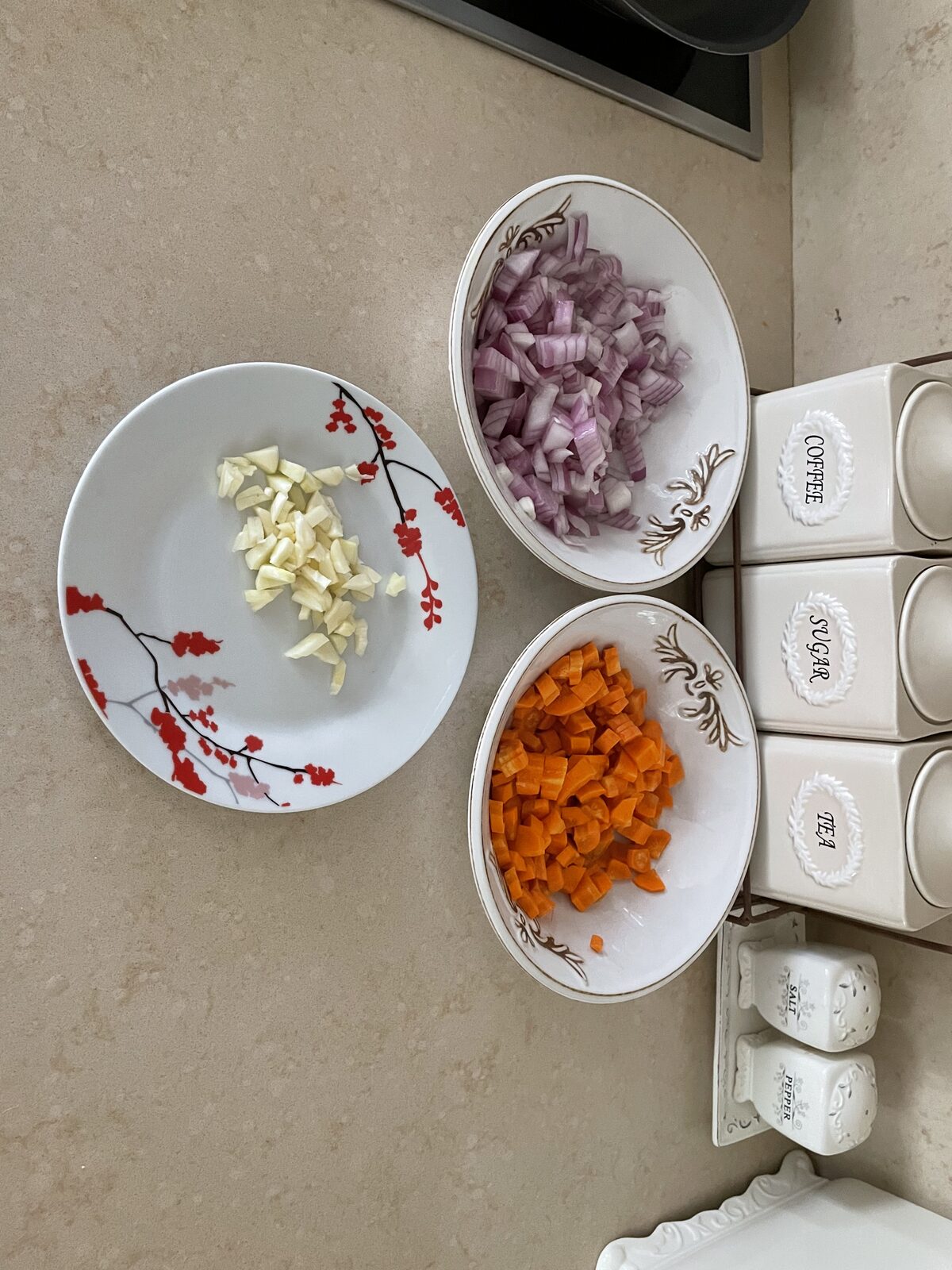
Ingredients
For the pot:
- 2 shallots, diced
- 2 bell peppers (paprika), diced
- 2 carrots, diced
- 4-5 fresh tomatoes, roughly chopped (about 500 g)
- 1 can (400 g) crushed tomatoes
- A handful of fresh basil
- A few bay leaves
- Salt, black pepper
For the pan:
- 500 g minced meat, half beef and half pork, locally sourced
- 2 cloves garlic, roughly chopped
- 2 tablespoons dried tomato paste
- Olive oil
- Salt, black pepper
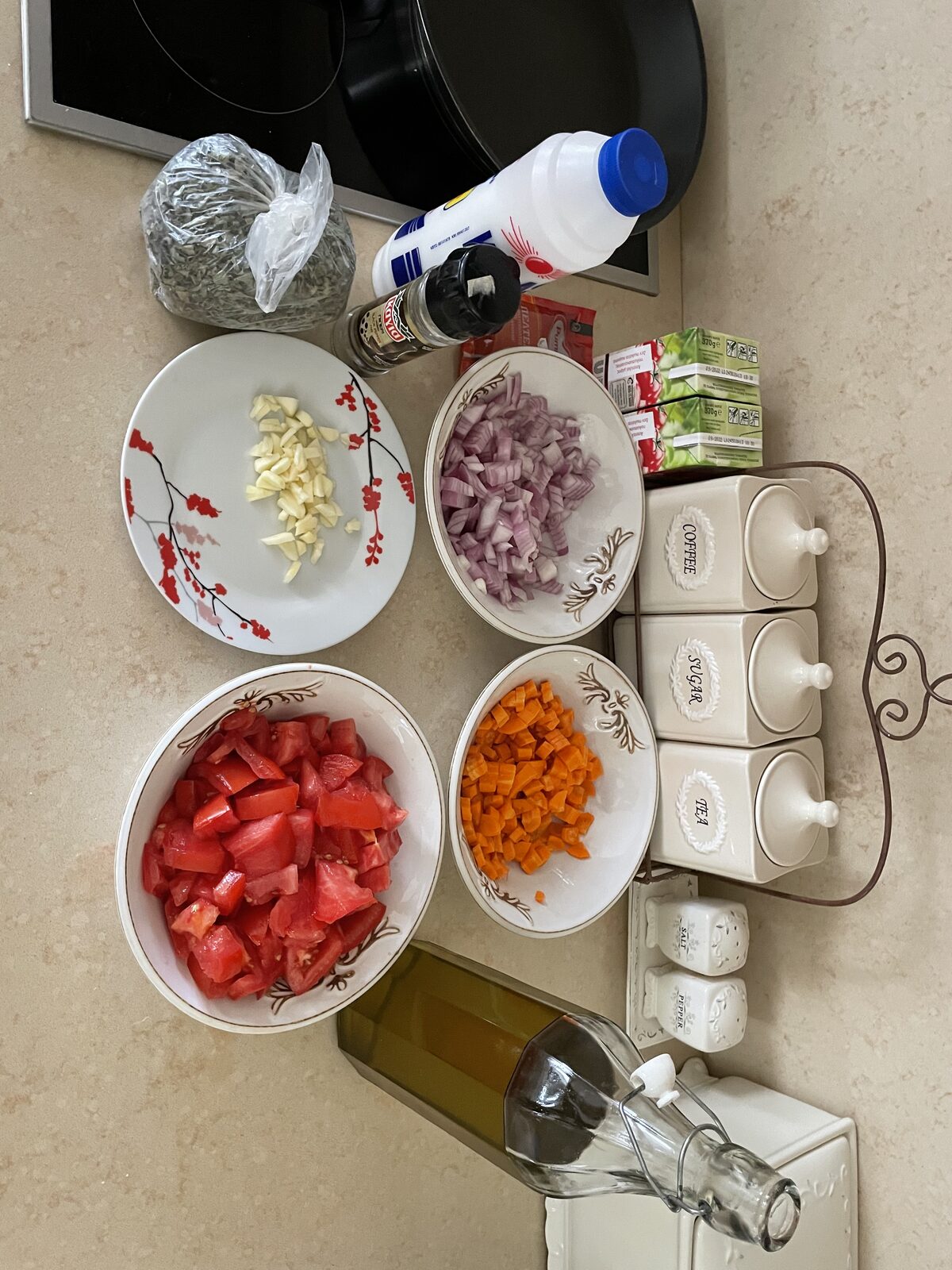
Steps
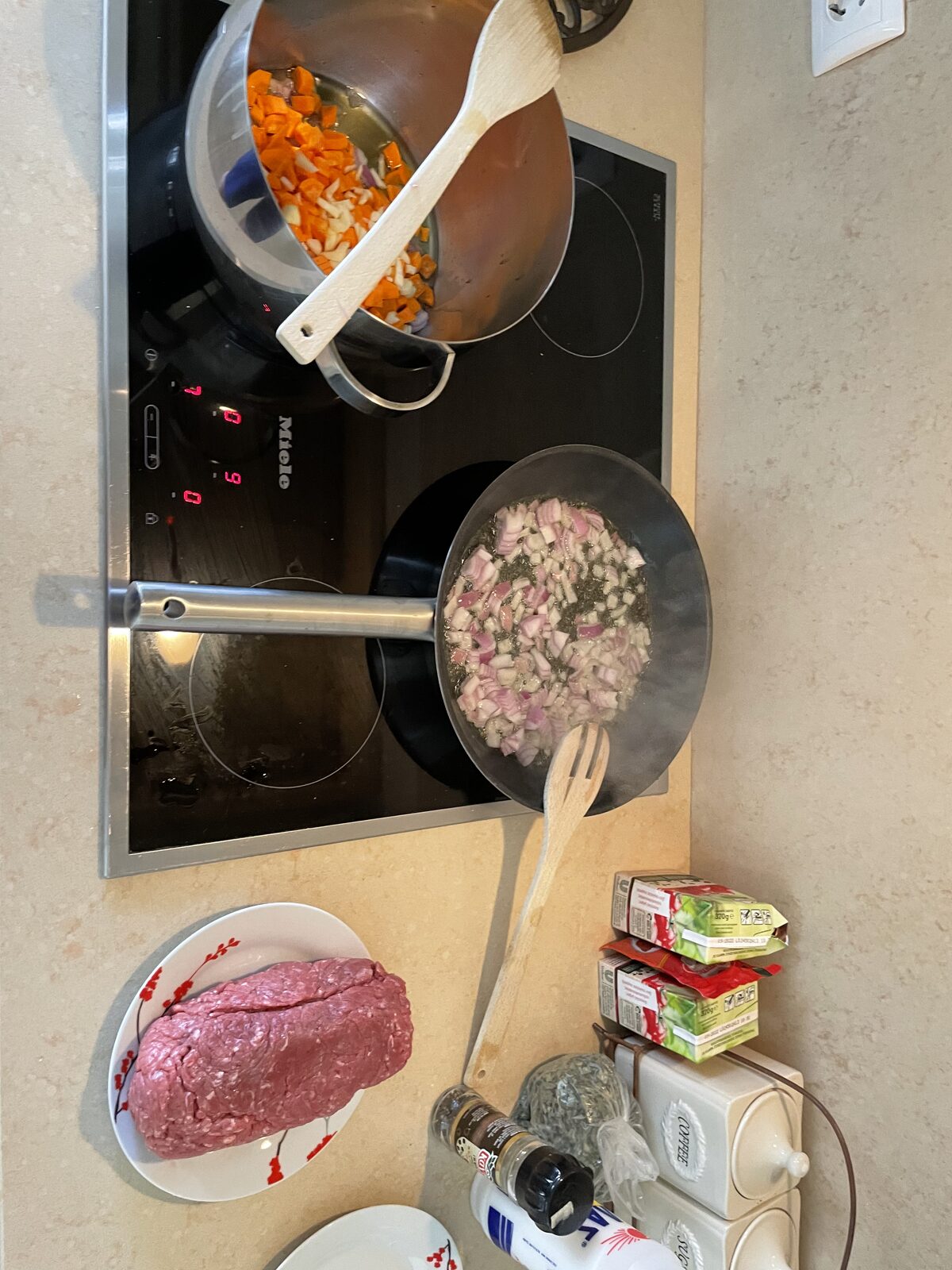
- Heat olive oil in a large pot over medium heat. Add the shallots, paprika, and carrots. Cook until soft, about 8 minutes.
- Add the fresh tomatoes and let them simmer down with the vegetables. Once they start breaking apart, add the canned tomatoes. Season with salt and pepper, tear in the fresh basil. Let it simmer.
- Meanwhile, heat olive oil in a separate pan on high. Add the garlic and the dried tomato paste, then the minced meat. Sear it hard, break it apart, and keep the heat up until the meat is properly browned through and crumbly. Season with salt and pepper.
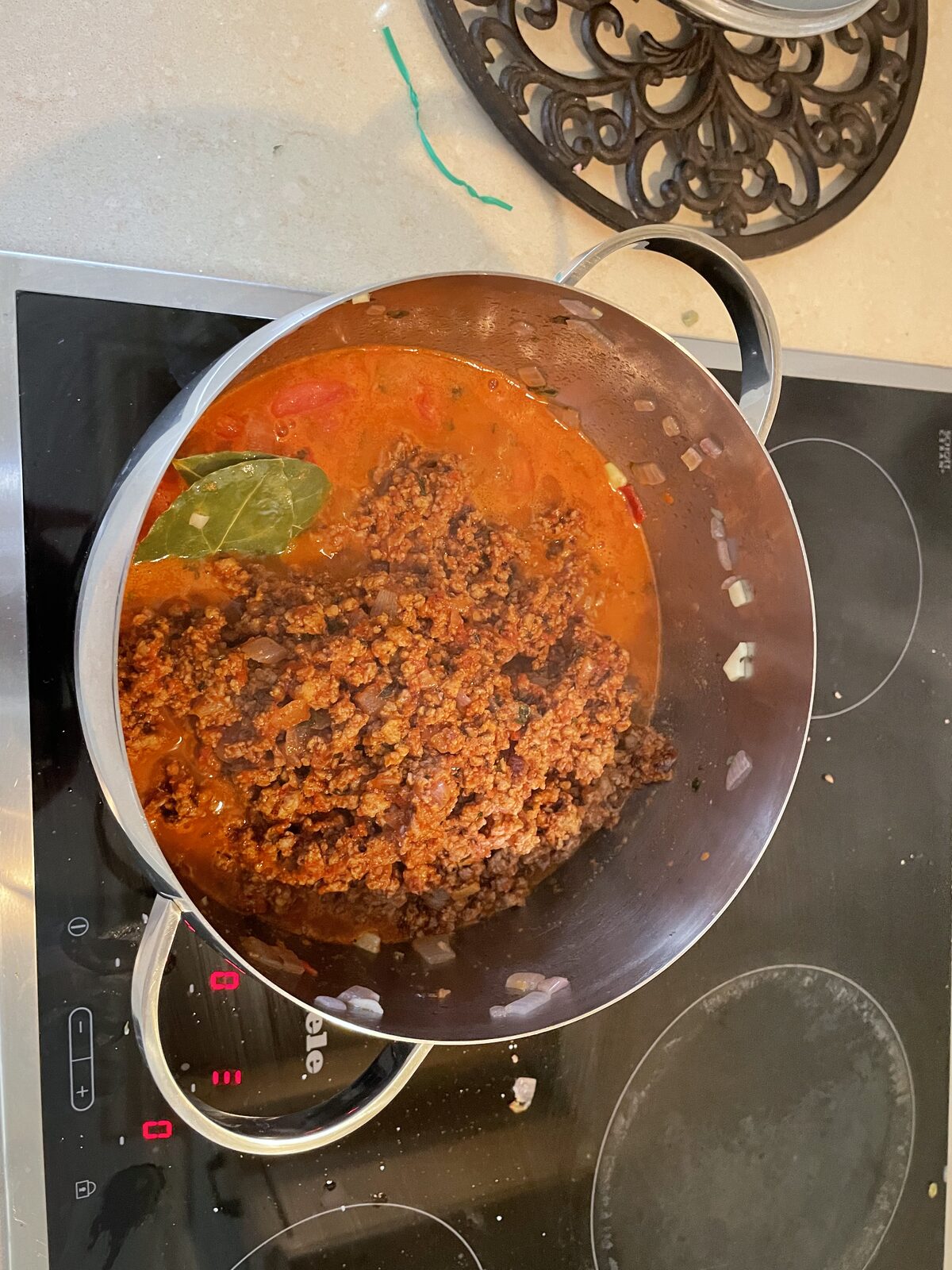
- Combine the meat into the pot with the vegetables. Add the bay leaves. Stir everything together.
- Let the ragù simmer on low heat for a long time, at least an hour, longer if you can. The sauce should be thick and rich. Remove the bay leaves before assembly.
Béchamel
The béchamel in this lasagna does not go between the layers. It goes on top, as a thick finishing layer that turns into a golden crust with the Gruyère. Make it smooth and do not skimp on the nutmeg.
Ingredients
- 60 g butter
- 60 g flour
- 750 ml whole milk
- Whole nutmeg, freshly grated
- Salt, pepper
Steps
- Melt the butter in a saucepan over medium heat. Add the flour and whisk constantly for about 2 minutes. You want a pale roux, not a brown one.
- Add the milk gradually, whisking the whole time. Each addition should be fully incorporated before you add the next.
- Keep whisking until the sauce thickens enough to coat the back of a spoon, about 5 minutes.
- Grate in a generous amount of fresh nutmeg. Season with salt and pepper. Pull it off the heat.
Assembly
Ingredients
- 250 g lasagna sheets (the no-boil kind, laid flat and broken to fit where needed)
- 100 g Gruyère, grated (be generous, this is the topping)
Steps
- Preheat the oven to 180°C (convection) or 200°C (top/bottom heat).
- Spread a layer of ragù on the bottom of a large glass baking dish. Just enough to coat it, so the first pasta sheets do not stick.
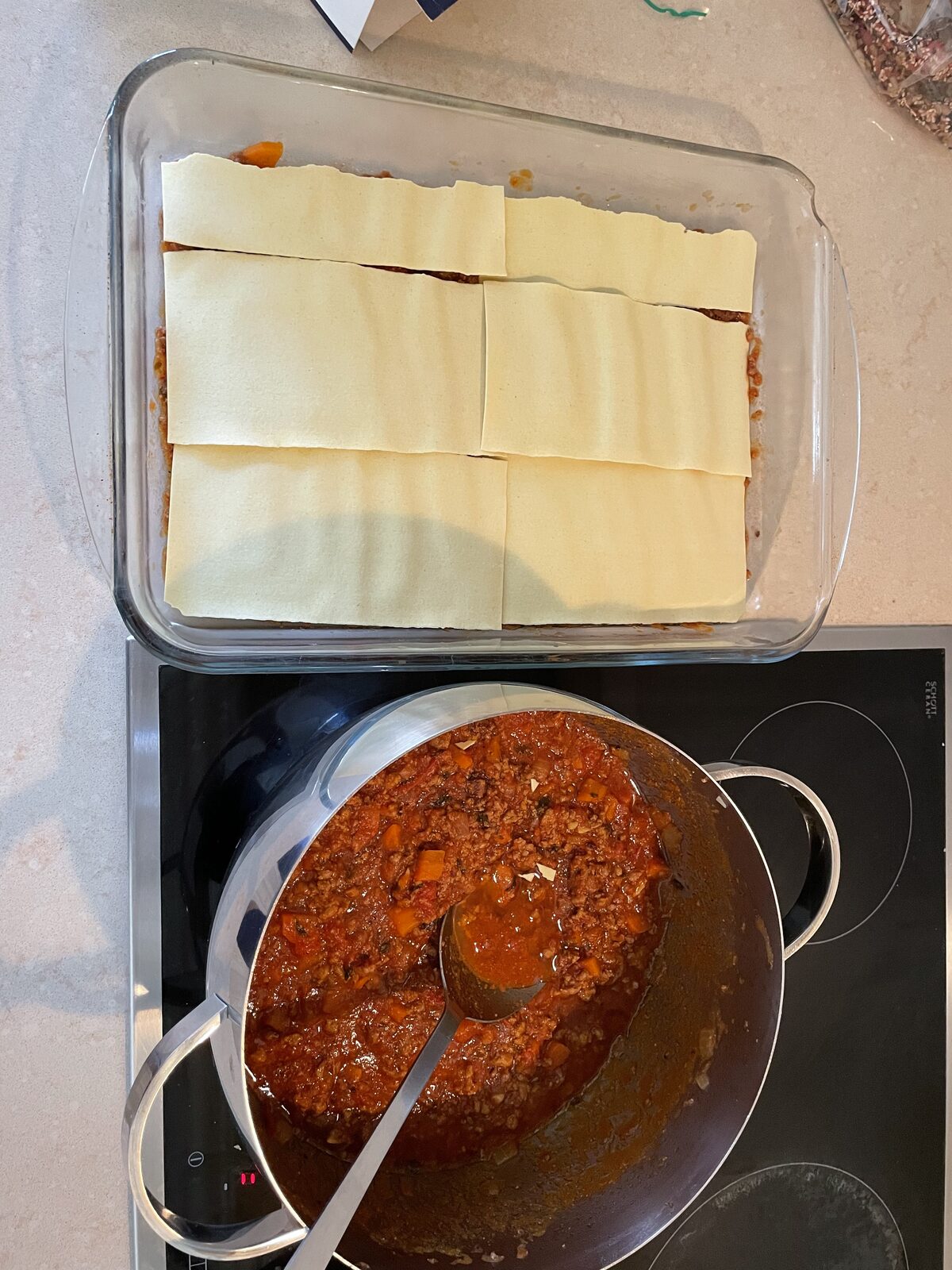
- Lay down a single layer of pasta sheets. Break them to fill gaps, do not overlap.
- Spread a generous layer of ragù over the pasta.
- Repeat: pasta, ragù, pasta, ragù. Build three to four layers of pasta, depending on the depth of your dish. Every layer is ragù and pasta, nothing else.
- Finish with a final layer of ragù on top.
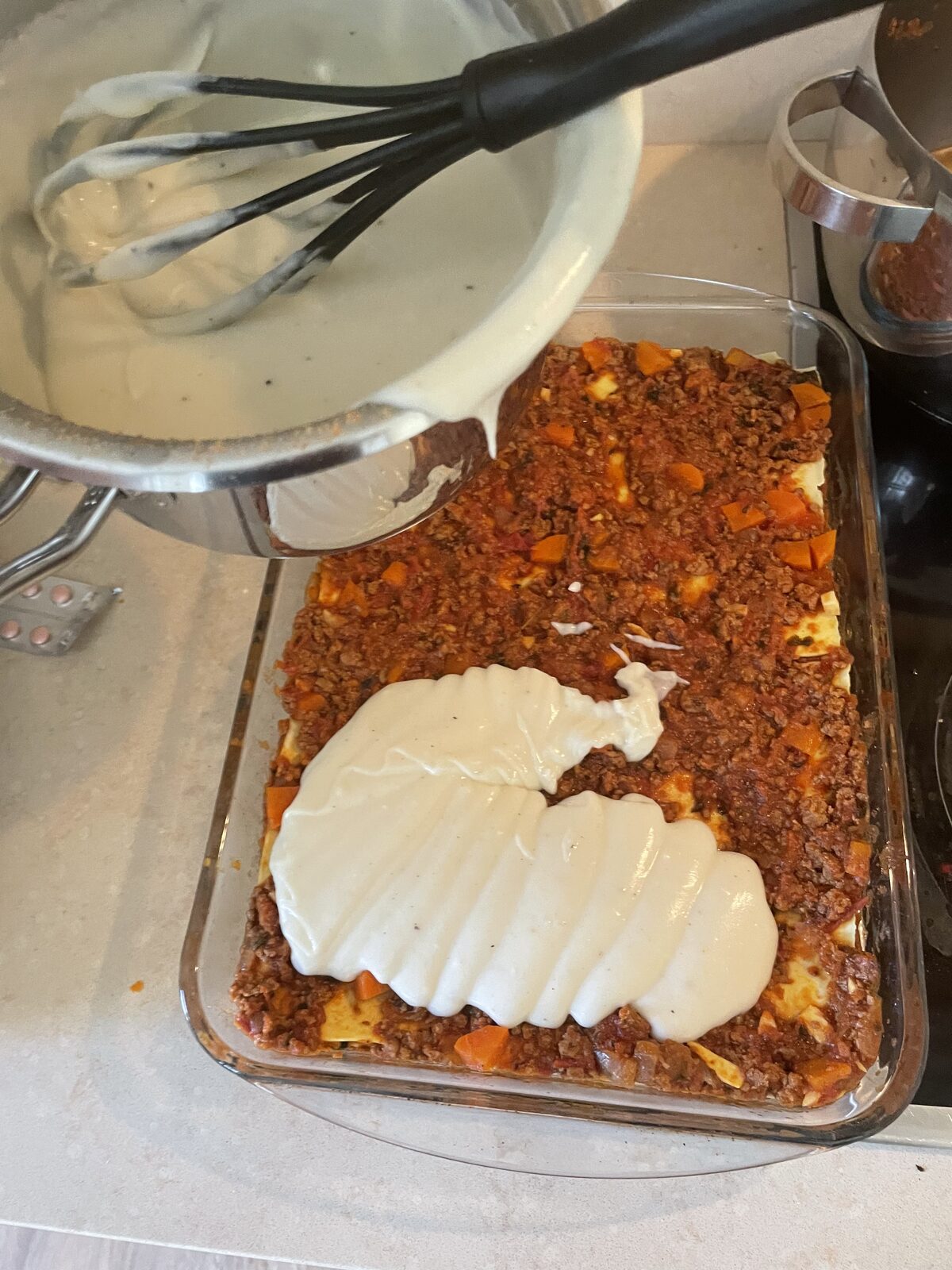
- Pour the béchamel over the top layer and spread it evenly to cover everything.
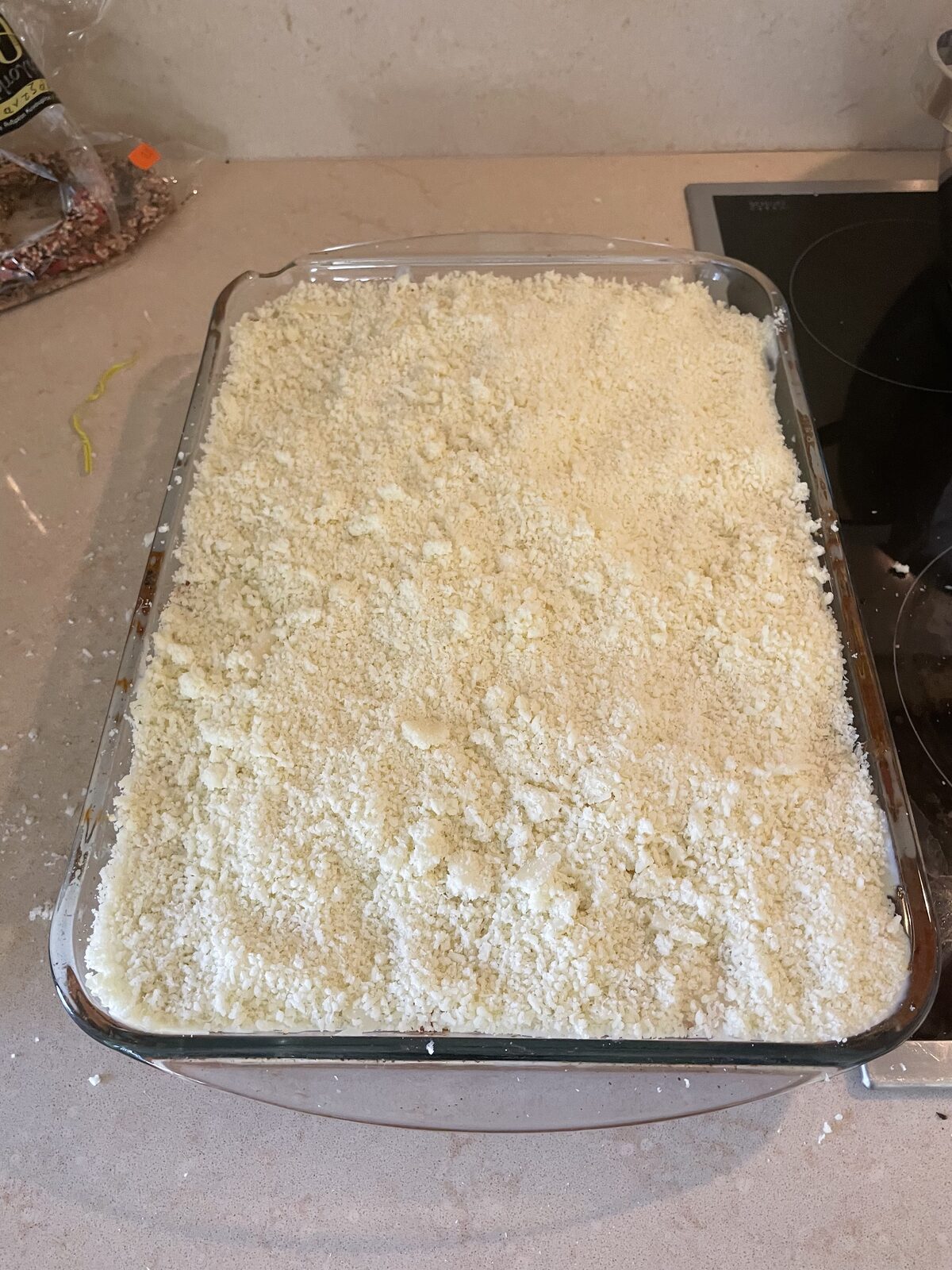
- Cover the béchamel with a generous layer of grated Gruyère. Do not be shy with it, this is what becomes the crust.
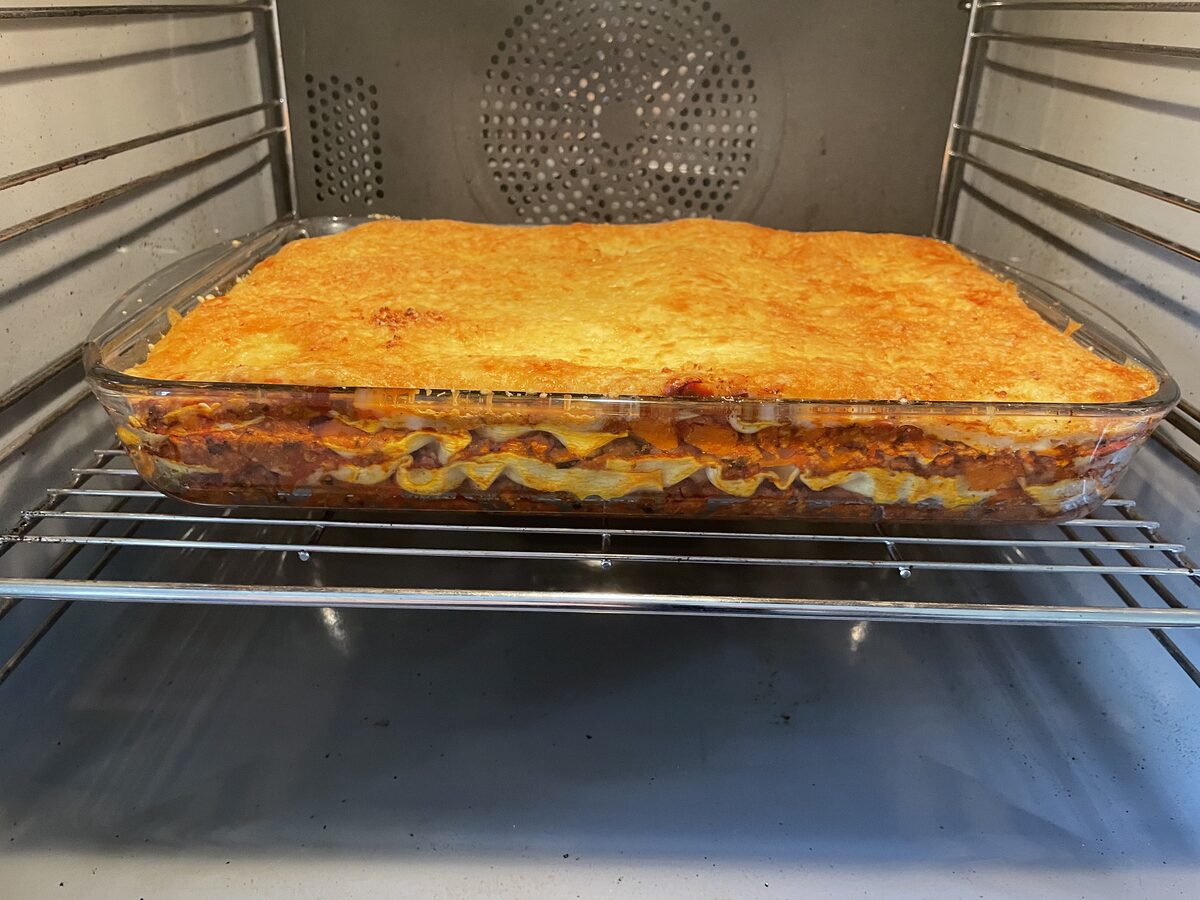
- Place in the oven uncovered and bake for about 35 to 40 minutes, until the top is deep golden brown and the edges are bubbling.
- Let it rest for at least 10 minutes before cutting. This is the hardest part of the entire recipe.
Notes
The two-vessel approach to the ragù is not about being precious. It is about getting actual browning on the meat. If you dump raw minced meat into a pot full of wet vegetables, it steams instead of browns, and you lose all that flavor. Searing the meat hard in a hot pan with garlic and tomato paste builds a completely different depth than gently cooking it into a sauce.
Using both fresh and canned tomatoes is deliberate. The fresh tomatoes go in first with the vegetables and simmer down into the base. The canned tomatoes add body and consistency on top of that. When fresh tomatoes are in season the balance shifts toward fresh, but the canned base stays.
The béchamel only going on top is the part that surprises people who are used to the version where every layer gets béchamel. Keeping it on top means the ragù layers stay distinct and the pasta cooks in the meat sauce rather than in dairy. The Gruyère melts into the béchamel and forms a proper crust, thick and golden, which is the best part.
This feeds 6 people generously or 4 people who have been looking forward to it all day. It reheats well the next day, covered with foil at 160°C for about 20 minutes. Some would argue it is better on day two, and I would not fight them on that.
The whole process takes about 2.5 hours from start to table, with most of that being the ragù simmering while you do other things. Good time to clean up the kitchen and accept that you will eat later than planned.